
Defense Attorney
Who We Are
Ibraham Dbouk has defended hundreds of California clients charged with misdemeanors to serious and violent felonies. Mr. Dbouk is familiar with local Sacramento judges and prosecutors and has successfully negotiated dismissals and favorable resolutions for many of his criminal defense clients.


Why have an attorney?
Whenever you are arrested or charged with a crime, it is important to have an attorney sit down with you as soon as possible. If the police reports are available, your attorney will review them and discuss them with you. They will advise you about your possible defenses, consequences, and what your options are going forward. If you feel anxious, your attorney will be there to answer any questions you may have about your case or the criminal process in general.
Even if you think you may have no defense, a skilled attorney can parse through the evidence and spot issues you may not have known existed. For instance, there could be issues with the reason the officer stopped you, or the way they searched your person or property. If such issues exist, the prosecution may be barred from using certain evidence against you.
A skilled attorney will think of mitigating evidence that could help negotiate a lesser charge or hopefully a dismissal. Just because you are arrested and charged with a crime, does not mean you are guilty. If you find yourself in a tough situation, contact the Dbouk Law Office, P.C. to make sure your rights are protected from the outset.
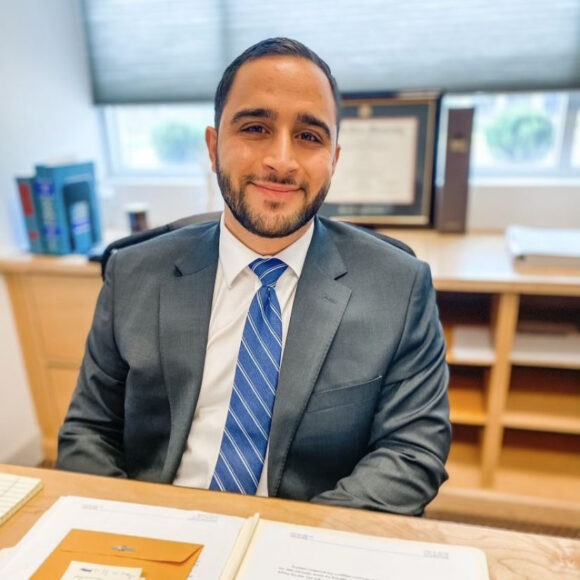
Ibraham Dbouk
Criminal Defense AttorneyAre you being investigated for a crime but not yet arrested or charged? It is never too early to hire an attorney to represent you. The phrase “anything you say can and will be used against you in court” is true. It is important to have an attorney that can communicate on your behalf and nip in the bud any investigation before it turns into an arrest or formal charges.
If you have been subpoenaed to testify as a witness but do not wish to testify because you are scared, don’t want to incriminate yourself, or believe you have a privilege to not testify, contact us to make sure your rights are protected.
Being charged with a crime, any crime, can put a permanent stain on your reputation. A misdemeanor charge can carry a maximum of one year in county jail. A felony carries the potential of time in state prison. We have experience and success defending against a variety of criminal charges.
If you have been arrested for a DUI it is wise to contact an experienced attorney immediately. There are both administrative and criminal consequences of a DUI.
Administrative aspect: Once arrested, the DMV will likely take action to suspend your license within 30 days of your arrest. You will have only 10 days from the date you receive notice in the mail to request a hearing. At the hearing you will have an opportunity to contest the allegations against your driving privilege. After the evidence is heard, the Driver Safety Hearing Officer will decide whether or not to suspend your driver license. The suspension could be from 4 months up to 1 year. We will diligently represent you at the DMV hearing and help protect your driving privilege.
Criminal aspect: A DUI arrest will likely lead to charges in court. If convicted, the consequences could be jail time, probation, alcohol education class, installation of an ignition interlock device, and further suspension of your license. We have experience defending against both alcohol and drug DUIs.
Unfortunately, an arrest may still show up on your background check even if you were never charged with a crime. Also, an old conviction that is eligible for expungement may still be on your record until you take initiative to remove it. We can assist you in cleaning up both old arrests and convictions.
Sacramento’s Best Criminal Defense Attorney
Award Winning Legal Representation








A Criminal Defense Attorney Protects Your Rights
Facing criminal charges puts your freedom, your record, and your future on the line. A skilled defense attorney’s job is to protect your legal rights, build you a fair defense, and guide you through a justice system that can feel confusing and stacked against you. Here’s why having the right attorney in your corner matters when you’ve been charged with a crime:
Legal expertise: A defense attorney brings a deep, working knowledge of criminal law and how the process actually unfolds. That knowledge lets them evaluate the evidence against you and build a defense strategy suited to your specific case, not a generic playbook.
Protection of your rights: The constitution guarantees people accused of crimes certain protections: the right to remain silent, the right to a fair trial, the right to confront your accusers, and protection from unlawful searches and seizures. A defense attorney makes sure those rights are honored at every stage and steps in the moment they’re not.
Case assessment and investigation: Your attorney digs into the evidence and the circumstances of your arrest, collects evidence of their own, interviews witnesses, and looks for weaknesses or inconsistencies in the prosecution’s case. That groundwork is what a strong defense strategy is built on.
Negotiation and plea bargaining: Not every case goes to trial. When it makes sense, your attorney negotiates with the prosecution on your behalf, working toward reduced charges, lighter penalties, or alternative sentencing. Whether a plea deal is worth taking is a judgment call your attorney makes based on the specifics of your case.
Court representation: If your case goes to court, your attorney handles it: filing motions, presenting arguments, cross-examining witnesses, and advocating for you every step of the way. Their job is to make sure your side is presented as effectively as possible.
Mitigation and sentencing advocacy: If a case results in conviction, your attorney doesn’t stop working. They advocate for a fair sentence by presenting mitigating factors like your background, character, lack of a prior record, or circumstances that contributed to what happened, often leading to a reduced sentence or an alternative to incarceration.
When your freedom is on the line, you want someone who knows the system and will fight for the best possible outcome, whether that’s a dismissal, an acquittal, a reduced sentence, or a favorable plea deal. Contact Attorney Dbouk today at (916) 718-7223 or through our web form for a free case assessment.

First offense with 2 charges, one of which was dropped at the first court appearance, the second though it did go on for a year, was successfully dismissed. Mr. Dbouk has very much proven his skills. Would absolutely reccomend to others.
Andrew Mark
He (Ibraham Dbouk) helped me understand the situation I was in and went over different ways we can win my case. Was facing some serious charges, ended up not facing anything. I’m thankful for that. If you need a good lawyer this is your guy.
Jaleel Rashid
He (Ibraham Dbouk) was with me every step of the way, kept me updated, but more importantly made me feel like he had my back, was honest, and would work with me on any question big or small.
Chuy Magana
Ibraham is very professional, caring, compassionate. He is kind and understanding. He's very flexible with his time. Not to mention a very hard worker.
Mona Buksh
Ibraham was so professional, understanding and efficient. He genuinely seemed like he cared about my case and treated me like a friend. I felt like he went above and beyond to get me the justice I deserve.
Jocelyn Handford
I really appreciate all the hard work he put in and how quick he was to respond to me. Awesome job Ibarham! I would definitely recommend anyone to Dbouk Law office specifically for Ibarham!
Jessica Musni
Ibraham is the best! He helped my sister with her case and we all could not be more happy with the end result! Ibraham was very professional and he talks you step by step on what steps to take.
Angie Musni
He set up a excellent defense, I couldn’t of asked for better representation. He will sit down and learn you, learn your case. I feel like being a lawyer for him wasn’t just about the money, he seems passionate about it!
Tammy Rider
I could tell right away that Ibraham is well respected in court and fights hard. He frequently updated me on my case and answered all my questions. After a few months Ibraham got my case dismissed!!
Steven Moore
Ibrahm was my attorney in a DV case; case got dismissed before there was even a court hearing. Such a great attorney, felt very comfortable with him and trusted him 100% very flexible with payments!
Angelina Robles
Ibraham represented me when I was being investigated for a crime I did not commit. He was able to communicate with the police on my behalf which resulted in no arrest or charges. I recommend this lawyer.
Jose M
My public defender wouldn't help me and it was his job. This man helped me and didn't think twice; I am so thankful for him, he really did help me more then I can explain guarantee services with him. Thanks so much.
Vanessa Chavez
Extremely professional, punctual, & prepared individual, he was very upfront with the situation and explained it to me in terms I could understand, would 10/10 recommend him.
Ryan Lowe
My best experience with an attorney ever! Ibraham Dbouk Esq. is very knowledgeable and has the connections needed for the best resolution.
Frank Stephen
Mr. Dbouk put my mind at ease and immediately responded to any questions I had.
Jason Ketchem
Dedicated and Effective Sacramento Criminal Defense Attorney

Ibraham Dbouk attended Santa Clara University School of Law. During his time at Santa Clara University he was elected President of the Criminal Law Society, tutored law students, participated in the Honors Moot Court Competition, and competed on the Trial Team against other top tier schools nationwide.
FAQ
Get Informed
Miranda rights include the right to remain silent and the admonition that any statements you make to a law enforcement officer will be used against you in your case, the right to have an attorney present during police questioning, and the right to have an attorney appointed if you cannot afford one. If the police take you into custody and conduct an interrogation but fail to advise you of your Miranda rights, the statements you provide will be deemed inadmissible as evidence against you in court.
An arrest without a warrant is permitted when an offense is committed in the presence of law enforcement, or if the police officer has probable cause to believe the person committed a felony regardless of whether it took place in the officer’s presence.
According to California Vehicle Code 40300.5 and Penal Code Section 836, police can make an arrest without a warrant any person they believe person had been driving while under the influence of an alcoholic beverage or any drug.
Under California’s Three Strikes law defendants convicted of a serious and violent felony who have two or more prior strikes can be sentenced to 25 years to life. Increased penalties are also assessed for people who are convicted of a second offense under this law, even if they have not yet accrued three strikes.
Instead of posting bail, you can request an O.R. release (a release on your own recognizance) which is simply a promise that you will appear for future court proceedings. A judge will consider factors such as prior criminal history and the severity of the crime in deciding on whether to grant an O.R. release, and any conditions for your release. You may be granted an O.R. release as long as your release is not considered a danger to public safety, and there is a likelihood that you will appear at future court hearings.
How Can We Help?





Criminal Defense Services Available Throughout Greater Sacramento, Yolo, Placer, and Solano Counties
The cities we provide legal defense include, but are not limited to:
Antelope, Arden-Arcade, Auburn, Benicia, Carmichael, Citrus Heights, Davis, Dixon, Elk Grove, Fairfield, Fair Oaks, Folsom, Galt, Gold River, Granite Bay, Isleton, Lincoln, Loomis, North Highlands, Orangevale, Rancho Cordova, Rio Linda, Rio Vista, Roseville, Rocklin, Suisun City, Vacaville, Vallejo, West Sacramento, Winters, Woodland
The information on this website is for general information purposes only. Nothing on this site should be taken as legal advice for any individual case or situation. This information is not intended to create, and receipt or viewing does not constitute, an attorney-client relationship.